
Cyclone Alfred update: Storm intensifies to Category 2 ahead of rare landfall in Australia

Your support helps us to tell the story
From reproductive rights to climate change to Big Tech, The Independent is on the ground when the story is developing. Whether it’s investigating the financials of Elon Musk’s pro-Trump PAC or producing our latest documentary, ‘The A Word’, which shines a light on the American women fighting for reproductive rights, we know how important it is to parse out the facts from the messaging.
At such a critical moment in US history, we need reporters on the ground. Your donation allows us to keep sending journalists to speak to both sides of the story.
The Independent is trusted by Americans across the entire political spectrum. And unlike many other quality news outlets, we choose not to lock Americans out of our reporting and analysis with paywalls. We believe quality journalism should be available to everyone, paid for by those who can afford it.
Your support makes all the difference.
Cyclone Alfred has intensified to Category 2 as it barrels towards Australia’s southeastern coast, prompting evacuation orders and a state of emergency.
The storm is expected to make landfall on Thursday or Friday between Brisbane and the Sunshine Coast and could be one of the most destructive in the region in decades, officials warned.
If it follows its projected path, Alfred will be the first cyclone to directly impact Brisbane since Nancy in 1990.
Forecasts indicate potential rainfall of 300-600mm, with some areas possibly receiving up to 700mm. Wind gusts are expected to exceed 120kmph, accompanied by large waves that may lead to coastal erosion and flooding.
Queensland premier David Crisafulli urged residents to “please be prepared” and ready “canned food and bottled water”.
“It is important that people take the event seriously, they stay up to date with warnings,” he said.
“We’re dealing with a very heavily populated part of the state, a state that hasn’t seen a cyclone for many years, in fact, many decades, get this close to the coast.”
Is climate change responsible for Cyclone Alfred’s unusual path?
Tropical Cyclone Alfred’s southern path has raised concerns among scientists, with experts questioning whether climate crisis is extending cyclone activity beyond traditional regions.
Associate professor Iftekhar Ahmed from the University of Newcastle explains that cyclones typically form in the tropics and warmer waters, but Alfred is moving further south than usual.
“Cyclone Alfred is predicted to impact northern NSW, which is generally not at risk for cyclones. The last cyclone warning here was more than 50 years ago,” Dr Ahmed said.
He suggests that rising global temperatures may be expanding the reach of tropical cyclones into areas that were previously considered safe.
“This could indicate that due to global warming, the reach of tropical cyclones is extending further than the tropics, requiring preparedness in areas where cyclones are unprecedented.”
While more research is needed to confirm whether Alfred’s track is directly linked to climate change, recent cyclones, like Jasper in 2023, have also taken unusual paths, prompting concern among meteorologists.
Dr Tom Mortlock, Head of Climate Analytics at Aon, warns that tropical cyclones reaching unusual territories, like in southeastern Queensland and northern NSW, pose a high risk due to unprepared populations and infrastructure.
“Most tropical cyclone risk actually resides in southeast Queensland. The probability is lower, but the risk, probability multiplied by consequence, is much greater,” Dr Mortlock said.
Scientists also point to warmer sea surface temperatures, that have been fuelling stronger hurricane and cyclones in recent years, and the warmth currently extend unusually far south.
“Right now, ocean temperatures are warm enough to sustain tropical cyclones down to Sydney, which is very unusual,” Dr Mortlock added.
Stuti Mishra4 March 2025 09:40
Airlines offer free flight changes as Cyclone Alfred threatens Queensland and NSW
Major Australian airlines are offering passengers the chance to change or cancel their flights without fees as Cyclone Alfred threatens to bring dangerous winds and rainfall.
Qantas, Jetstar, and Virgin Australia have introduced flexible travel policies for those flying to or from several airports in Queensland and New South Wales between 4-9 March.
Passengers can either reschedule their flights at no extra cost or receive a travel credit or voucher if they choose to cancel.
“We’re closely monitoring Tropical Cyclone Alfred off the coast of Queensland. If your flight is impacted, we’ll notify you by SMS using the number provided in your booking,” Qantas said in a statement.
Passengers flying to or from Ballina, Brisbane, Bundaberg, Hervey Bay, Gold Coast, and Maroochydore can now make fee-free date changes for up to 14 days from their original travel date, subject to availability.
Jetstar has also offered similar flexibility, allowing changes for flights to and from Sunshine Coast (Maroochydore), Hervey Bay, Brisbane, Gold Coast, and Ballina Byron Bay.
“We understand that some customers may no longer wish to travel,” Jetstar said on its website, encouraging passengers to take advantage of the free rebooking options.
Stuti Mishra4 March 2025 08:10
Golf tournament and AFL matches cancelled ahead of Cyclone Alfred
Tropical Cyclone Alfred has forced the cancellation of a major golf event and the postponement of AFL season-opening matches as it approaches Australia’s east coast.’
The WPGA Championship on the Gold Coast, co-sanctioned by the Ladies European Tour, was called off due to expected extreme wind and flooding.
“The decision has been made to ensure the safety of players, staff, fans and all stakeholders, which remains the priority,” organisers said in a statement on Tuesday.
The AFL, the top flight of Australian Rules football, has also postponed two matches in southern Queensland, including Thursday night’s Brisbane Lions vs Geelong Cats game.
“Out of an abundance of caution, the AFL made the decision now to ensure the health and safety of clubs, players, officials… importantly – the wider southeastern Queensland and northern NSW community remains the priority,” the AFL said in a statement.
The decision came after coaches urged the AFL to make an early call on the games.”It sort of reminds me of the Covid situation,” Geelong coach Chris Scott told Australian media.
“It’s a bit unpalatable talking about when you prefer to play a game of footy when people are sandbagging their houses.
“The National Rugby League (NRL) match between the Dolphins and South Sydney Rabbitohs in Brisbane on Friday is also under review.
Football Queensland has suspended all training and matches in the state’s southeast. The Touch Football national championships in New South Wales have also been cancelled.
Cyclone Alfred is expected to make landfall late Thursday or early Friday, bringing intense rainfall, damaging winds, and life-threatening flash flooding to southeast Queensland and northeast New South Wales.
Stuti Mishra4 March 2025 07:10
Why Cyclone Alfred’s landfall is rare and unusual
Tropical Cyclone Alfred’s approach to Australia’s southeastern coast is seen as unusual mainly due to its anticipated landfall near Brisbane – this is a region rarely impacted directly by tropical cyclones.
Cyclones typically form in the warmer waters of northern Australia and often dissipate before reaching the cooler southern regions.
The last time a cyclone made direct landfall near Brisbane was in 1974, making Alfred’s trajectory notably uncommon.
Alongside Queensland, New South Wales is also under cyclone warnings.
Such a forecast is also unusual for NSW, said Steven Bernasconi, the Bureau of Meteorology’s manager of hazard preparedness.
“This is unusual for NSW… We don’t often have tropical cyclone watches and warnings in the NSW jurisdiction,” Mr Bernasconi said.
Stuti Mishra4 March 2025 06:50
Mapped: Cyclone Alfred’s path
Stuti Mishra4 March 2025 06:30
Gold coast mayor warns Cyclone Alfred could be most significant system since 1954
Gold Coast’s acting mayor Donna Gates said Tropical Cyclone Alfred is expected to be the most significant storm system since 1954.
“It’s not a good outcome for the Gold Coast, and there is growing concern that Cyclone Alfred is getting stronger as it approaches the coast,” she told reporters a while ago.
She said while several parts of southeast Queensland are preparing for the cyclone, the city of Gold Coast was the “greatest concern”.
Cyclone watch has spread from the Sunshine Coast to the Gold Coast, extending past Brisbane since yesterday, Gates said.
“We are expecting gale force winds on Thursday and Friday, accompanied by very heavy rainfall which won’t ease until Sunday.”
Stuti Mishra4 March 2025 06:00
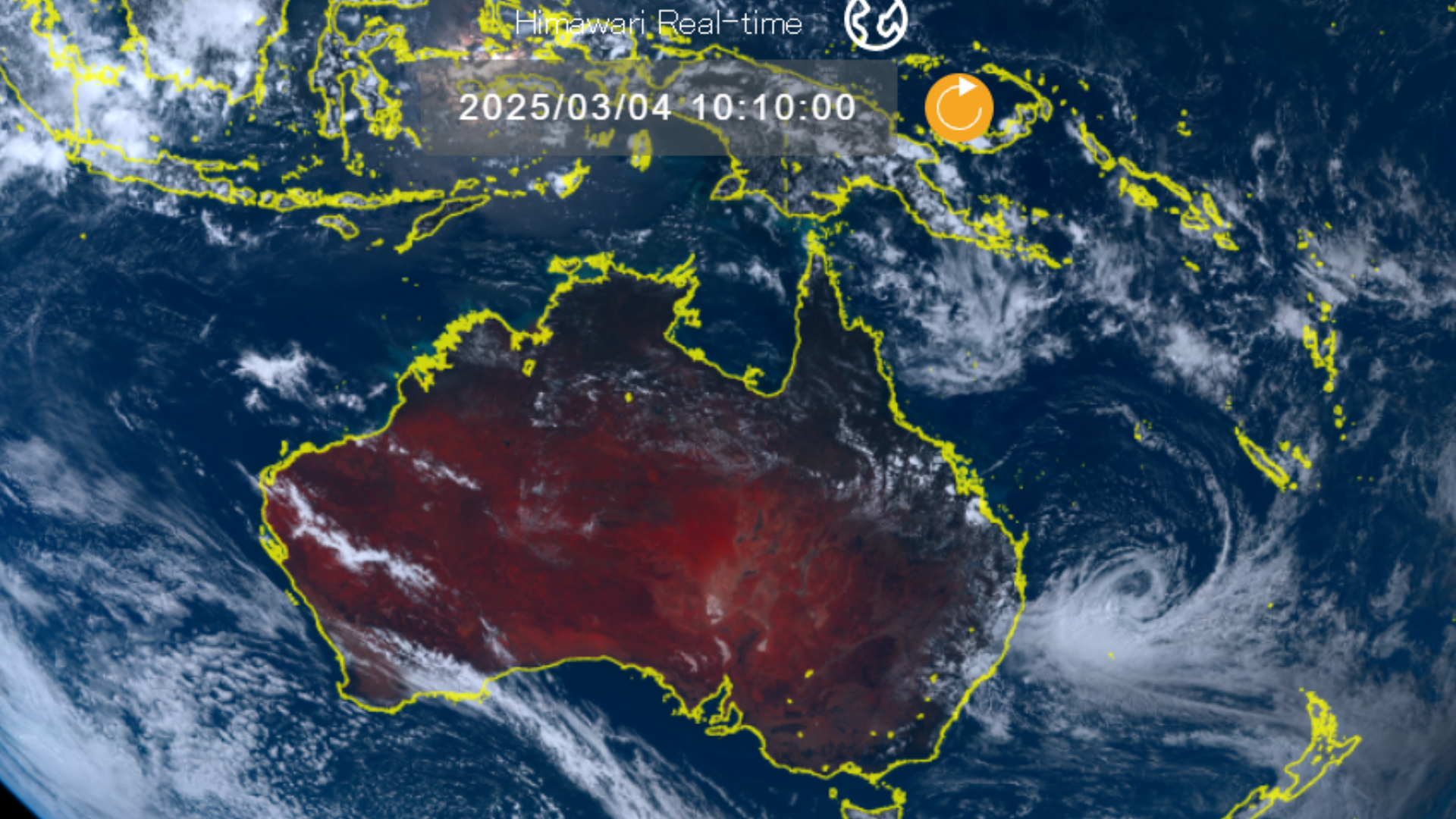
Satellite view shows Alfred churning towards Australia’s east coast
Stuti Mishra4 March 2025 05:45
Video: Australian navy rescues adventurer struck by cyclone while rowing across Pacific Ocean
Stuti Mishra4 March 2025 05:31
People begin evacuating voluntarily after official warnings
Voluntary evacuations have already begun in some areas, with authorities urging residents in flood-prone regions to leave before conditions worsen.
Acting Queensland police commissioner Shane Chelepy told reporters that some families have already chosen to evacuate, particularly on South Stradbroke Island. Meanwhile, emergency crews are door-knocking at-risk areas in the Sunshine Coast, Moreton Bay, and Brisbane Bay regions to warn residents of potential dangers.
“If you decide to leave, you need to leave before the event starts impacting you. Go and stay with family and friends,” Mr Chelepy said.
“The worst time to make the decision to leave is when we’re in the middle of the event because [it] not only puts you at risk, but it puts the emergency services at risk who need to come and assist you.”
Stuti Mishra4 March 2025 05:12
Cyclone Alfred could bring 80cm storm surges
The Bureau of Meteorology (BoM) has warned that Cyclone Alfred could bring tides at least half a metre higher than normal, with some areas potentially experiencing rises of up to 0.8 metres.
Sue Oates from the BoM explained that these predictions are based on the highest astronomical tide – the highest natural tide level a location can expect.
“With the Category 2 system coming in, and based on the best modelling guidance available to us, we’re anticipating at least half a metre above the highest astronomical tide, with slightly higher values closer to the cyclone’s centre,” Ms Oates said.
These higher-than-usual tides are expected to be most severe near the cyclone’s landfall, though exact locations remain uncertain. Coastal areas south of the cyclone’s centre will likely experience the biggest surges.
Stuti Mishra4 March 2025 04:43


