
Chances of Caribbean development increasing

Now that Tropical Storm Rafael has faded to what AccuWeather calls ” a shredded zone of downpours and thunderstorms,” can we look forward to a week of a no-drama Atlantic and the Caribbean?
Maybe not. According to National Hurricane Center forecastersa broad area of low pressure will likely form over the southwestern Caribbean Sea in a few days with a growing chance of development late this week, and they’re tracking a tropical wave in the central Caribbean that’s bringing heavy showers and thunderstorms across Puerto Rico and Hispaniola. More showers are hitting the southwest and far northwest Caribbean.
AccuWeather forecasters issued a high risk of potential tropical development over the next week.
“Get ready for Sara. We expect the next tropical storm to develop in the Caribbean this week,” said AccuWeather meteorologist Bernie Rayno. “The development process is already underway. There are showers and thunderstorms around Hispaniola that will move west. The storms will get a boost on Wednesday when wind shear starts to fade away. A front will provide more upward motion by midweek, helping these storms organize.”
Some moisture from Rafael joined a slow-moving front to dump 1 to 8 inches of rain in parts of eastern Texas and Louisiana Sunday. Some or most of the rest will be drawn northward into the central Gulf Coast region this week to bring downpours to Louisiana, Alabama and parts of Georgia, AccuWeather meteorologist Grady Gilman said, as part of a cold front moving over the lower Mississippi Valley.
But the season isn’t over yet.
“Once again, just as with Rafael most recently, the western and central part of the Caribbean Sea will be conducive for tropical depression and storm formation, provided that moisture increases over the region, wind shear remains low and there is a clustering of showers and thunderstorms in the first place,” AccuWeather said, adding that the zone of wind shear north of the Caribbean that has been blocking development could dissolve during the third week of the month.
The remnants of Rafael are expected to dissipate by Tuesday night as it continues to meanders around the Gulf.
➤ Weather alerts via text: Sign up to get updates about current storms and weather events by location
The next named storm of the Atlantic Hurricane season will be Sara.
Here’s the latest update from the NHC as of 1 p.m. EST Monday, Nov. 11:
National Hurricane Center map: What else is out there and how likely are they to strengthen?
Systems currently being monitored by the National Hurricane Center include:
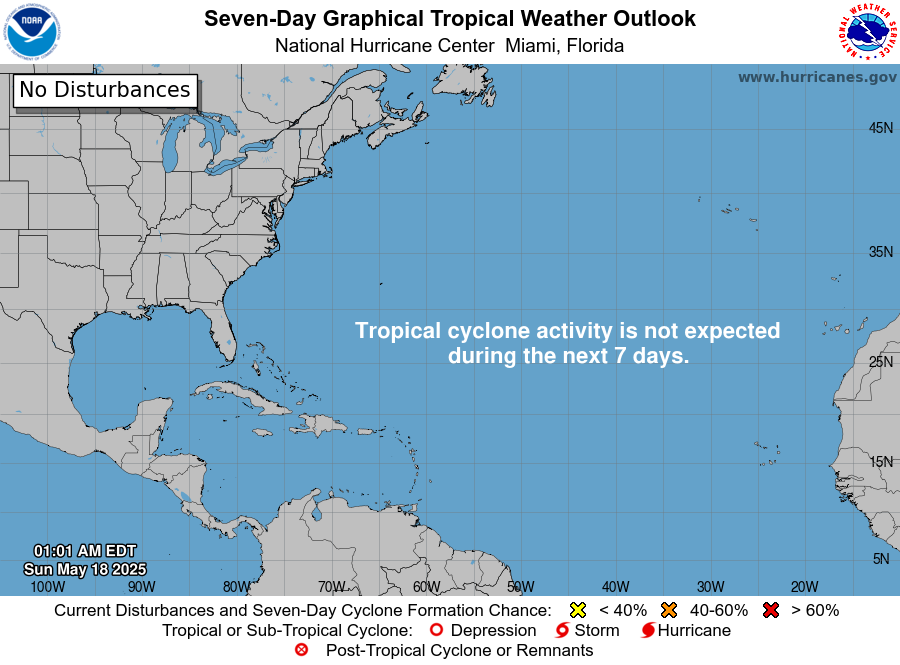
Central and Western Caribbean Sea: An area of disorganized showers and thunderstorms to the south of Hispaniola over the central Caribbean Sea is associated with a tropical wave. This system is expected to move slowly westward during the next few days, and environmental conditions appear conducive for gradual development.
A tropical depression could form late this week or this weekend while meandering over the western Caribbean Sea.
- Formation chance through 48 hours: low, near 0 percent.
- Formation chance through seven days: medium, 50 percent.
What do the colored areas on the NOAA map mean?
The hatched areas on a tropical outlook map indicate “areas where a tropical cyclone — which could be a tropical depression, tropical storm or hurricane — could develop,” said National Hurricane Center Deputy Director Jamie Rhome.
The colors make it visibly clear how likely a system could develop with yellow being low, orange medium and red high.
The National Hurricane Center generally doesn’t issue tropical advisories until a there is a named storm, but there is an exception.
“If a system is near land and there is potential for development, the National Hurricane Center won’t wait before it issues advisories, even if the system hasn’t become an actual storm. This gives residents time to prepare,” Rhome said.
Weather watches and warnings issued in Florida
When does hurricane season end?
The Atlantic hurricane season runs from June 1 through Nov. 30.
The Atlantic basin includes the northern Atlantic Ocean, Caribbean Sea and Gulf of Mexico.
Interactive map: Hurricanes, tropical storms that have passed near your city
Excessive rainfall forecast
Stay informed. Get weather alerts via text
What’s next?
We will continue to update our tropical weather coverage daily. Download your local site’s app to ensure you’re always connected to the news. And look for our special subscription offers here.
This story has been updated to add new information.


